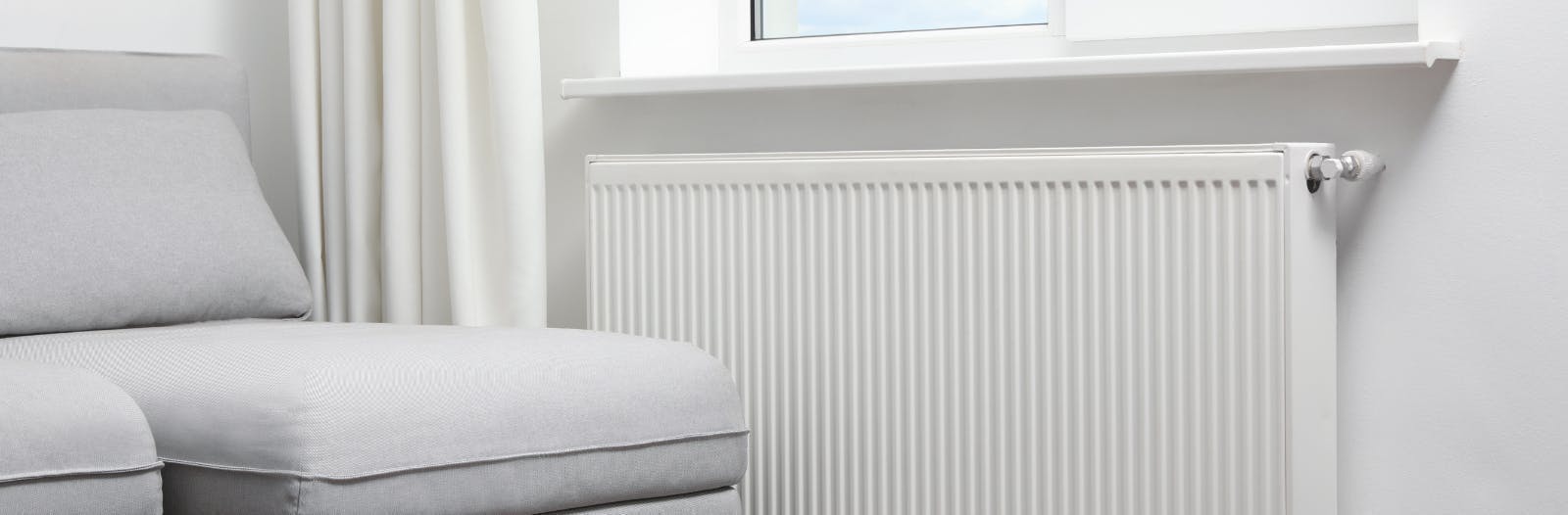
If a radiator is not heating up properly it is frustrating, but it does not always mean a major breakdown. With a few safe checks, you can often find what is wrong or at least narrow it down before calling an engineer.
Quick check: how many radiators have a problem?
First, look around the house and note which radiators are affected. This gives a clue about the likely cause.
One radiator cold: often a stuck valve, air in that radiator, or local sludge
Several radiators cold: possible pump, zone valve, or system balancing problem
All radiators lukewarm: boiler settings, pressure, pump issues, or heavy sludge
Before touching anything, make sure you know where your main stop tap is so you can shut water off in an emergency. If you ever smell gas, hear hissing from gas pipework, or see obvious leaks at the boiler, skip the checks and call a Gas Safe engineer immediately.
Step 1: thermostat and programmer settings
Many heating problems come down to controls rather than the boiler or radiators themselves. Start with the basics so you are not paying for a callout over a simple setting.
Check your room thermostat is set above the current room temperature and that it has power. If it uses batteries, replace them. For a wireless thermostat, check it is communicating with the receiver by looking for any warning lights or error symbols.
Next, look at your programmer or timer. Make sure the heating is set to "on" or to a current time period rather than "off" or "hot water only". If you have separate zones upstairs and downstairs, check both are calling for heat.
Step 2: radiator valves and TRVs
Most radiators have two valves: a control valve or thermostatic radiator valve (TRV) at one end and a lockshield valve at the other. A problem with either can leave a radiator cold.
Checking and freeing a TRV
If your radiator has a numbered head at one end, that is the TRV. Turn it fully up to the highest setting. If the radiator stays cold while others nearby are hot, the pin inside the valve may be stuck, particularly in older homes or areas like Bedfordshire with hard water.
You can safely try this on your own radiator valves:
Turn off the heating and let the system cool slightly
Unscrew or pull off the plastic TRV head (it should come away without tools or with a simple screw)
Underneath you will see a small pin in the metal body of the valve
Gently press the pin up and down with a hard object like a spoon handle; it should spring back
If the TRV pin is still stuck at this point, do not attempt to force or tap it. Contact a qualified heating engineer to inspect and fix the issue.
Lockshield valve position
The lockshield valve, often with a plain plastic cap or metal cover, controls how much hot water flows through the radiator. If it is fully closed the radiator will stay cold.
Use an adjustable spanner or small valve key to turn it a quarter turn anticlockwise and see if the radiator begins to warm. Make very small adjustments, as fully opening some lockshields can upset the balance of the whole system.
Step 3: bleed the radiator for trapped air
If the top of the radiator is cold but the bottom is hot, there is probably air trapped inside. Bleeding the radiator is a safe homeowner job as long as you are careful with hot water and check boiler pressure afterwards.
How to bleed a radiator safely
Follow these steps when the heating is off or just warm, not piping hot:
1. Switch off the heating at the programmer and wait for the radiators to cool slightly.
2. Place a towel or container under the bleed valve at the top corner of the radiator.
3. Insert a radiator key into the valve and turn it slowly anticlockwise.
4. You will hear air hissing out. Keep the valve open until water starts to flow steadily, then close it by turning clockwise.
5. Check for drips and wipe the area dry.
After bleeding one or more radiators, always move on to checking the boiler pressure.
Step 4: checking boiler pressure after bleeding
Bleeding releases air but also a little water, which can drop the pressure on a sealed system. Low pressure can leave all radiators lukewarm or cold.
Look at the pressure gauge on your boiler or nearby pipework. Most domestic systems should sit around 1.0 to 1.5 bar when cold, but check your boiler manual for the exact range.
If the pressure is below the recommended level, you can usually top up using the filling loop following the manufacturer’s instructions. Add water slowly so you do not overshoot, and stop once you reach the correct pressure. If the pressure keeps dropping over a few days, that points to a leak and you should call an engineer.
Stop and call us: If topping up pressure triggers a boiler lockout, you see leaks near the boiler, or the pressure climbs too high towards the red zone, switch the boiler off and contact a Gas Safe registered engineer.
Step 5: pump and zone valve indicators
If several radiators are cold or all are only lukewarm, the circulation pump or a motorised zone valve could be struggling. These live in or near the airing cupboard, near the hot water cylinder, or inside the boiler casing.
You can safely listen and feel from the outside of accessible components. A working pump will usually hum gently and the attached pipes will feel warm when the heating is on. A stuck pump may be silent or make a loud grinding noise. Do not remove the boiler cover unless the manual clearly says it is a user-removable case.
Zone valves often have a small manual lever and an indicator showing open or closed. If a heating zone stays cold, the valve may not be opening fully. You can note what the indicator shows, but any electrical or internal work must be left to a heating engineer.
Step 6: looking out for sludge and scale
Hard water and older pipework, common in many Bedfordshire homes, can lead to scale and sludge building up in the system. This can clog radiators and shorten boiler life.
Typical signs of sludge include radiators that are hot at the top but cold or cool at the bottom, gurgling noises, and frequent pump failures. You might also notice some radiators heat much more slowly than others, even after bleeding and valve checks.
While homeowners can not safely powerflush or chemically clean a system themselves, you can mention these symptoms to your engineer. They can advise on cleaning the system, fitting a magnetic filter, or adding inhibitor fluid to help protect against future build-up.
When to stop and call a professional
If you have worked through the safe checks and the radiator is still not heating up, it is time to bring in an expert. This is especially important if you notice repeating pressure loss, banging noises from the boiler, or the boiler frequently locking out.
Gas work, internal boiler components, rewiring, and full system cleaning are not DIY jobs. Handling them without the right qualifications is unsafe and can invalidate your warranty or home insurance.
Need help getting your radiators hot again?
For friendly, professional diagnostics and repair, contact Fixbot on 01234815101. Our engineers can track down stubborn issues, from stuck valves to sludge-filled pipework, and get your heating running efficiently again.
You can also book online through our boiler repairs page or arrange regular maintenance via our boiler servicing options. A well maintained system heats better, breaks down less often, and keeps your home comfortable when you need it most.