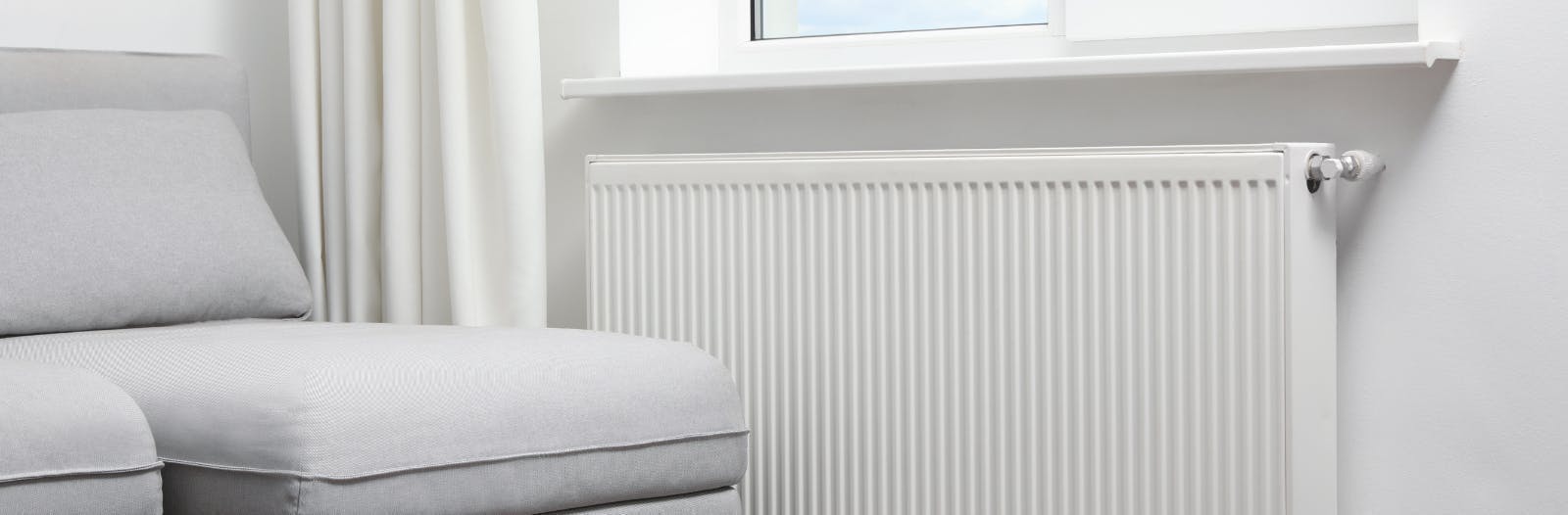
If your boiler has started making banging, knocking or whistling sounds, it is natural to feel worried. Those noises are often a warning that something inside the system is not quite right, and catching it early can save you from a costly breakdown later.
What kettling is and how it sounds
Kettling is the term engineers use when a boiler makes a loud rumbling or whistling noise, similar to a kettle boiling on the hob. It often gets louder when the boiler is working hardest for heating or hot water.
This usually happens when water flow through the heat exchanger is restricted. The water inside overheats, forms steam bubbles, then collapses back into water, creating that rumbling or banging sound.
In hard water areas, minerals in the water settle inside the boiler and form limescale. This limescale acts like an insulating blanket on the heat exchanger, creating hot spots and making kettling more likely.
Common causes of boiler banging and what they sound like
Different problems can create different noises. Paying attention to the type of sound and when it happens can help you and your engineer narrow down the cause.
Limescale on the heat exchanger: Deep rumbling, hissing or whistling when the boiler fires, especially in hard water areas.
Sludge restricting flow: Banging or gurgling from radiators and boiler, often with cold patches on radiators.
Trapped air: Gurgling or trickling noises in radiators and pipework, often worse when heating first comes on.
Pump issues: Loud humming, grinding or intermittent banging near the boiler or airing cupboard.
Loose pipework: Sharp knocking or tapping, especially when heating turns on or off.
Water hammer: Sudden loud bangs when taps or valves are closed quickly, caused by shock waves in the pipework.
Some of these issues are mainly annoying, but others can damage components over time. Ignoring persistent noises can lead to leaks, pump failure or even a complete boiler breakdown.
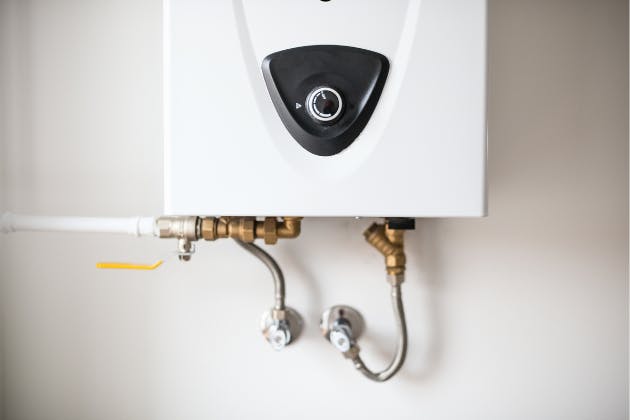
Safe checks you can do when your boiler is noisy
There are a few simple checks you can carry out safely before calling an engineer. If you ever feel unsure, stop and get professional help.
Bleed your radiators
Trapped air often causes gurgling and uneven heating. When the system is cool, you can use a radiator key to open the small valve at the top of each radiator, starting downstairs and working up.
Hold a cloth under the valve and turn slowly until air hisses out. As soon as water starts to flow steadily, close the valve firmly, then move on to the next radiator.
Check for cold spots and system pressure
After bleeding, run the heating and feel each radiator carefully. Cold spots at the bottom are a classic sign of sludge, which restricts flow and can lead to banging and kettling.
Next, look at the boiler pressure gauge when the system is cool. Most systems should sit around 1.0 to 1.5 bar when cold, but check your manual for the correct range. Very low or very high pressure can both cause noisy operation.
Listen carefully for where and when the noise happens
Try to pinpoint whether the noise is loudest at the boiler, a particular radiator, or along exposed pipework. This can help distinguish between pump issues, kettling in the boiler, or loose pipes in walls and floors.
If you have a combi boiler, notice whether the banging or kettling happens only when you run a hot tap. Noise only on hot water draw-off can be a strong clue that the plate heat exchanger is scaled or restricted.
Serious warning signs that need an engineer now
Some symptoms should never be ignored. Stop using the boiler and call a Gas Safe engineer immediately if you notice:
Any smell of gas near the boiler or meter
Visible leaks, dripping or staining around the boiler or pipework
A carbon monoxide alarm sounding or showing a warning
Boiling or kettling so loud it sounds like a kettle about to boil dry
The boiler repeatedly locking out or needing to be reset
These issues can be linked to unsafe combustion, overheating or failing components. Carrying on regardless can be dangerous and may cause lasting damage to the boiler.
How hard water and sludge create kettling and banging
In areas with hard water, minerals like calcium and magnesium settle inside the boiler as limescale. Over time, this scale coats the heat exchanger, making it harder for heat to pass into the water.
The boiler then runs hotter to reach the set temperature, leading to hot spots, mini steam pockets and the classic kettling sound. Sludge from rust and debris in radiators can have a similar effect by choking the pipework and lowering flow.
Both problems make your boiler work harder, use more gas and wear components faster. Dealing with them early is usually far cheaper than replacing major parts later.
Practical ways to prevent noisy boilers
Once the immediate fault is sorted, a bit of ongoing care can help keep your boiler quiet and efficient in the long term.
System chemicals and filters
A quality corrosion inhibitor added to the heating water helps slow rust and sludge build-up. Your engineer can test the existing water and top up or replace chemicals during a visit.
If you have a magnetic filter fitted, regular cleaning is essential. It sits on the return pipe to the boiler and catches rust particles before they enter sensitive parts, reducing the risk of kettling and pump damage.
Powerflush and system cleaning
If your radiators have heavy cold spots and the water from bleeding is very dark, a powerflush or other cleaning method may be worth considering. This uses specialist equipment and chemicals to move sludge out of the system.
An engineer can assess whether a full powerflush is appropriate, or if a lighter clean will do the job. Not every system needs a powerflush, so a proper diagnosis is important.
Annual boiler servicing
A yearly service gives an engineer time to check for early signs of kettling, loose pipes, pump issues and minor leaks before they become big problems. They can also check the gas combustion, safety devices and controls.
Regular servicing keeps your warranty valid, improves efficiency and helps ensure your boiler runs safely and quietly through winter.
Next steps if your boiler is already making a noise
If you are in Bedford, Milton Keynes or Cambridge and your boiler is banging, rumbling or kettling, it is best to get a professional diagnosis rather than ignoring it. A trained engineer can identify whether the cause is scale, sludge, a failing pump or something more serious.
For a clear boiler repair diagnosis or to get your noisy boiler checked, contact Fixbot on 01234815101.