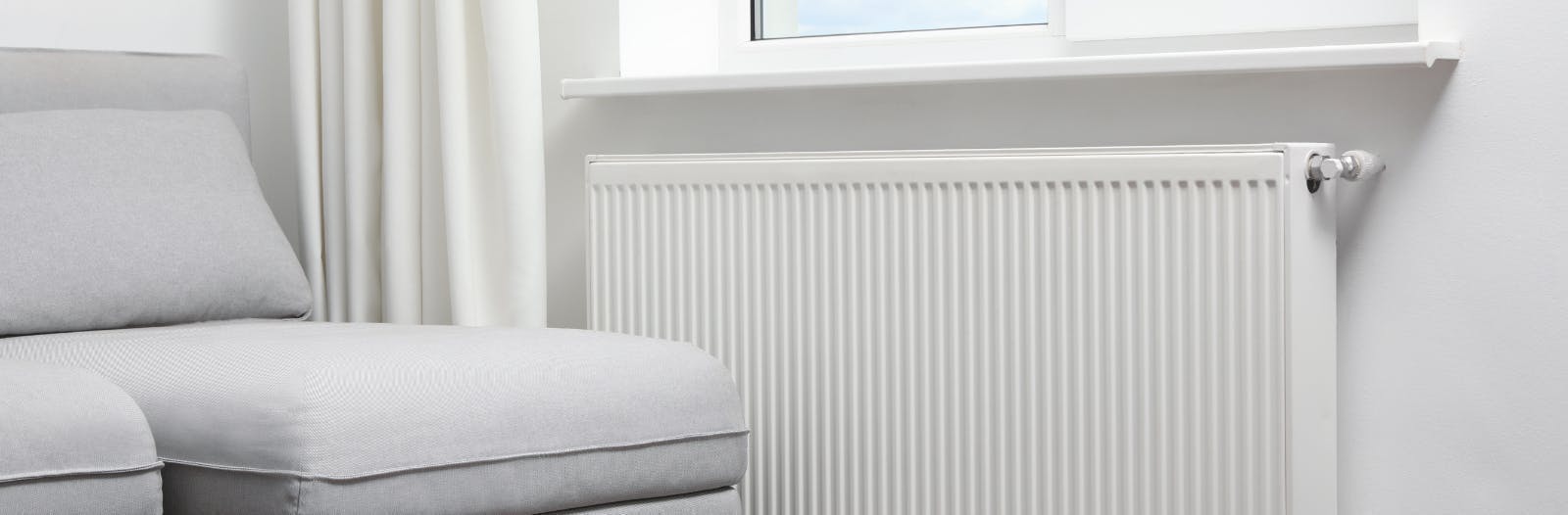
If your heating is on but some rooms feel like a sauna while others stay chilly, your radiators are probably out of balance. A bit of careful adjustment can often sort this out without touching the boiler settings.
What radiator balancing actually is
Balancing is the process of adjusting each radiator’s lockshield valve so that hot water flows evenly around your system. The aim is for all radiators to warm up at a similar rate.
Without balancing, radiators closest to the boiler can steal most of the hot water. Those further away then warm slowly or never feel properly hot, even if the system runs for hours.
The lockshield valve is usually the smaller, capped valve at one end of the radiator. You use this one to balance, not the on/off or thermostatic valve you turn every day.
When it makes sense to balance your radiators
Balancing is worth doing if you notice any of the following:
Rooms near the boiler get very hot, while distant rooms are cool
Some radiators heat up quickly, others take ages
You constantly tweak TRVs but still feel uneven heating
Before you start, check a couple of basics:
Bleed your radiators so there is no trapped air, and make sure your boiler pressure is within the recommended range once you have finished bleeding. Balancing will not work properly if air or low pressure is causing problems.
It is also sensible to pick a time when you can run the heating for at least an hour without needing to turn it off.
Staying safe while adjusting valves
Radiator pipes and valves can get very hot, so take care. Use a cloth or glove if you are unsure, and keep children away while you are working.
If a lockshield valve is stiff or looks corroded, do not force it. Forcing a seized valve can cause leaks. In that situation, stop and speak to a heating engineer instead.
Step-by-step guide to balancing your radiators
You do not need special tools for basic balancing. A small adjustable spanner or lockshield key, a notepad, and ideally a simple digital thermometer are enough.
1. Prepare the heating system
Turn the heating off and let the system cool for at least 30 to 60 minutes. This makes it easier to see what heats up first when you restart.
Open all radiator valves fully, including TRVs and lockshields. Count how many turns it takes to fully open each lockshield and note this down so you can always return to the starting point.
2. Turn the heating back on
Set the room thermostat fairly high so the boiler runs continuously while you test. Give the system 15 to 20 minutes to warm up.
Walk around the house and notice which radiators get hot first. Those closest to the boiler will usually heat up fastest.
3. Use touch test or a thermometer
For a simple approach, use the touch test. Carefully feel each radiator towards the top centre and judge how hot it is compared to the others.
For better accuracy, use a digital thermometer or infrared thermometer. Measure the surface temperature near the same spot on each radiator to keep things consistent.
4. Start with the radiator nearest the boiler
Find the radiator closest to the boiler flow pipe. This is often in the same room as the boiler or the room just beyond.
Gently close its lockshield valve fully, then open it by about half to one full turn. This restricts the flow a little, encouraging hot water to travel further around the system.
5. Work through the radiators in order
Move to the next nearest radiator. With the boiler still running, carefully feel its temperature. If it is hotter than most others, shut the lockshield slightly. If it is cooler, open the lockshield a little more.
Use small quarter-turn adjustments, then wait 5 to 10 minutes before checking again. Heating systems respond slowly, so patience is important.
6. Record your settings in a simple table
Keeping notes makes it much easier to fine-tune later. You can copy and adapt a simple template like this in a notebook or spreadsheet:
Radiator balancing record template
Radiator name | Before temp (°C or touch) | After temp (°C or touch) | Lockshield setting (turns open)
Hallway | Very hot / 65°C | Warm / 60°C | 0.75 turns
Lounge | Warm / 55°C | Warm / 60°C | 1.25 turns
Bedroom 1 | Cool / 45°C | Warm / 58°C | 1.75 turns
Use your own radiator names and either rough touch notes ("very hot", "warm", etc.) or actual temperatures if you have a thermometer.
7. Check the whole house again
After you have adjusted every radiator, let the heating run for another 20 to 30 minutes. Then walk around and see how evenly the radiators are heating.
Minor differences are normal, but you should no longer have one room baking while another never seems to warm. If needed, make small further tweaks, always noting the changes.
Common issues balancing will not solve
Balancing helps distribute heat, but it cannot fix every heating problem. If radiators still misbehave after careful balancing, there may be other faults.
Typical issues that need a heating engineer include:
Sludge or debris in radiators and pipework, often needing cleaning or powerflushing
Pump problems, such as a failing or incorrectly set circulation pump
Undersized system that simply cannot heat the whole property effectively
Faulty TRVs sticking shut or open, stopping proper flow
If several radiators never get fully hot, feel cold at the bottom, or you hear gurgling and rushing water sounds, it is a sign you may need more than balancing. A professional can check pump performance, system design, and advise on options such as powerflushing if sludge is present.
When to call in a professional
If you are unsure which valve is which, worried about damaging something, or your valves are old and stiff, it is safer to stop and get help. Heating systems carry hot water under pressure, so guessing is not a good idea.
For expert help with persistent cold radiators, boiler servicing, or boiler repairs, contact Fixbot on 01234815101. A qualified engineer can check your boiler, assess whether balancing is enough, and advise on solutions such as valve replacements so every room feels comfortable again.